Tree Nursery Catalogue
Deciduous trees for sale, grower-direct, from our bare root tree nursery are described below.
Most of the bareroot trees listed are for sale every year although, due to the vagaries of production and demand, there may be some variation. Our Price List (updated in February/March) has the species available to buy for the coming winter planting season, and details about freight/delivery.
To purchase trees from our nursery in Balingup, south of Perth, Western Australia (WA) you can place an order by telephone or online via email 'Contact Us'.
For more information about bare root trees please see the 'About Bareroot Trees' page.
Whether you’re landscaping an avenue, wanting to plant farm trees or some ornamental varieties to provide autumn colour, flowers and/or shade for your garden, please enquire if the species or variety you wish to buy is not listed - we may be able to help.
Japanese Maple
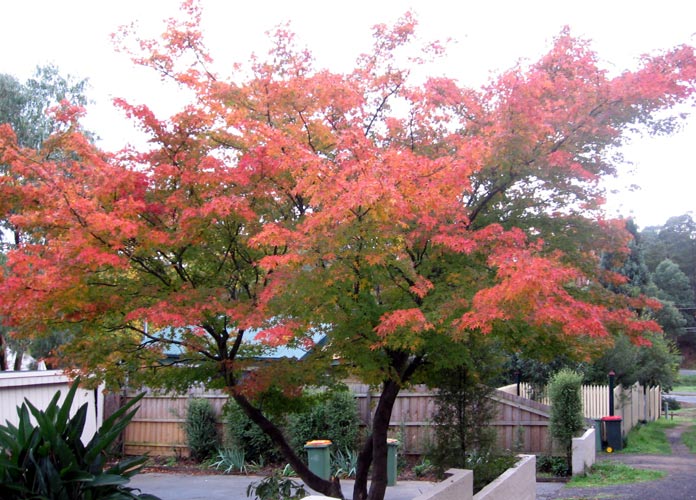 Acer japonicum
Up to 4m.* Small delicate spreading tree with elegant habit and beautiful fingered foliage which turns to red/purple/orange in autumn. It’s common for them to have multiple trunks joining close to the ground and a spreading crown nearly as wide as it is tall. Needs a sheltered position away from wind to prevent leaf scorch and a full sun See more →
Box Elder Maple
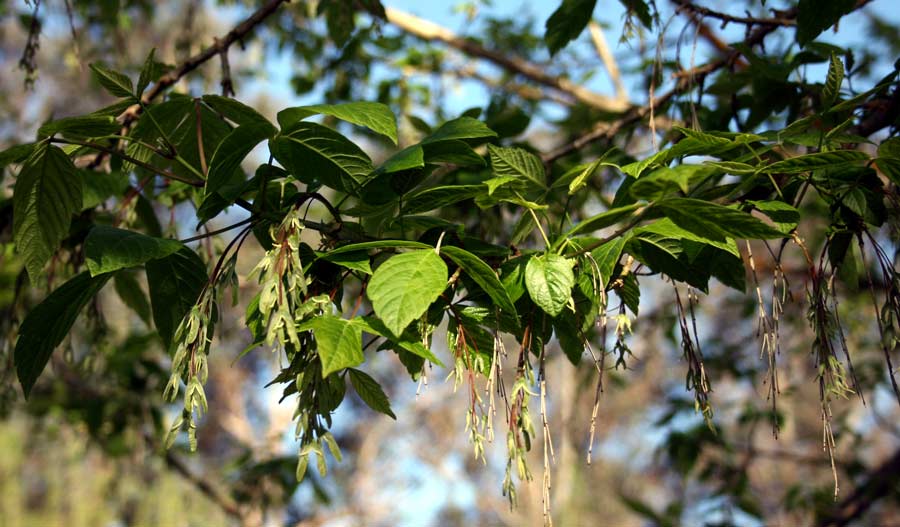 Acer negundo
8m exceptionally 10m.* A tough fast growing maple suitable for many applications. Tolerating a wide range of environmental situations including moist soil types, urban pollution, drier sites and some coastal exposure. Can be used as a fast approach to shade or screening. With light to mid green leaves, yellowing in Autumn this tree’s See more →
Sensation Maple
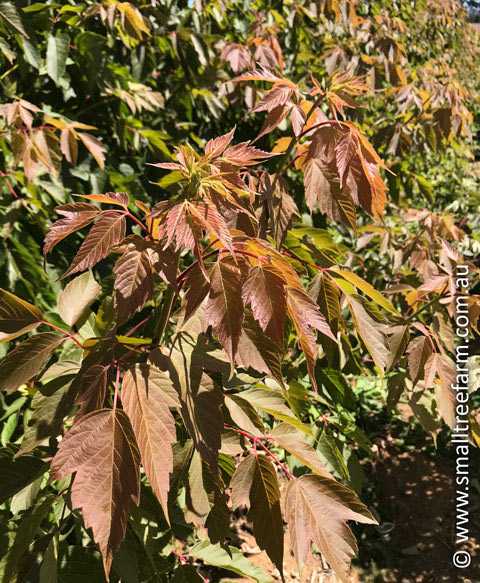 Acer negundo 'Sensation'
7-8m.* Unlike most box elder maple that tend to colour yellow in autumn, the Sensation Maple is a variety of box elder maple selected for its autumn reds and oranges. The Sensation Maple therefore offers the toughness and fast-growth rate of the box elder maple but with more flair in autumn. It also has improved form and branch structure. See more →
Red Maple
 Acer rubrum
12m exceptionally to 15m.* The classic Canadian Maple famous for its outstanding show of red in the Autumn. Featuring dark green foliage throughout summer with attractive clusters of red flowers on bare branches in spring. Of moderate size and growth, this tree makes a standout ornamental feature. Tolerant of a wide range of soils but needs See more →
Trident Maple
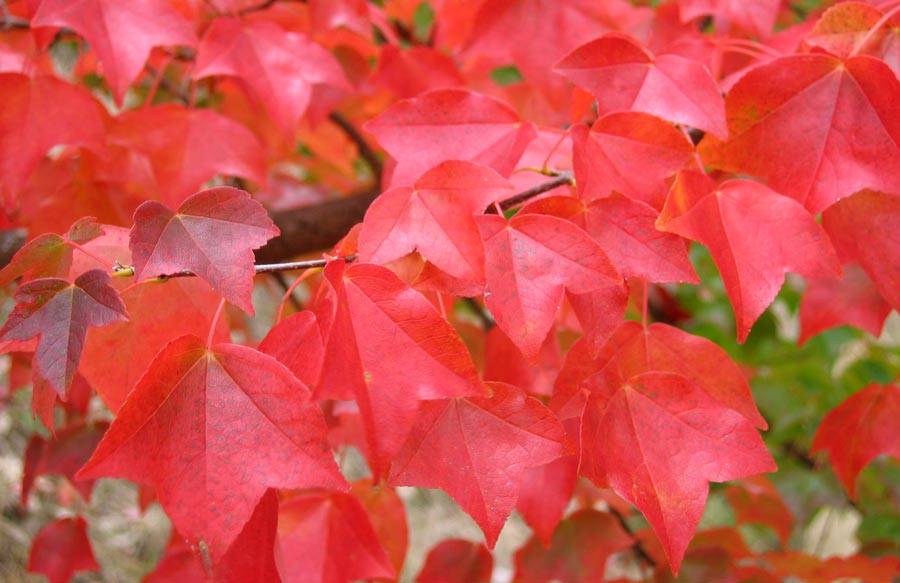 Acer trifidum
Up to 7m.* Seems to be the most reliable maple for the southwest of WA, Small to medium upright tree originating from China. Excellent range of red/orange autumn colour.This charming moderately fast growing tree can fit well into a small garden, into hedges, rows or planted alone. Has attractive peeling brown/orange and grey bark as it See more →
Silver Birch
 Betula pendula
 5-6m exceptionally to 9m.* “Ladies of the woods” Coleridge the poet name them.....Graceful lithe small to medium tree which is best planted in groups to create an impact. Stunning white trunk with a cascading elegant crown and fine weeping branches.Impressive all year round with its See more →
Kurrajong
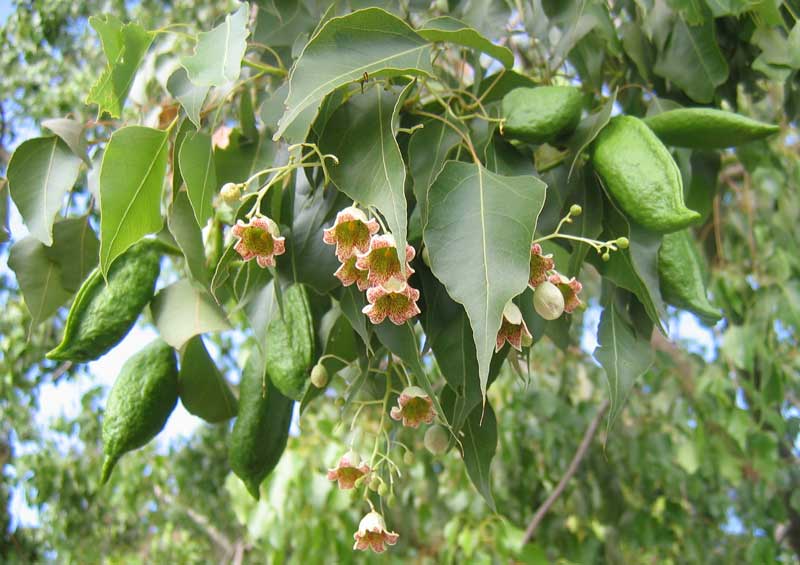 Brachychiton populneus
 Up to 13 m.* This handsome, iconic evergreen native is drought resistant. A solid trunk flaring at the base is characteristic of the Kurrajong. A useful landscape tree this is one of the few natives with a formal shape and bright green foliage.
See more →
Indian Bean Tree
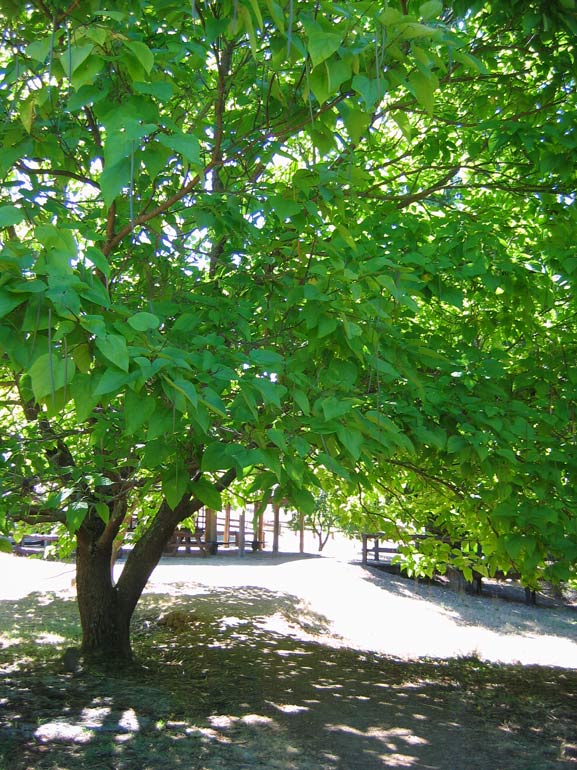 Catalpa bignonoides
10-12m exceptionally to 15m.* The Catalpa shares with its cousin the Paulowia the characteristics of showy floral displays and a luxuriant shady canopy but is a more robust tree that is tolerant of wet soils. This tree has a lush tropical appearance so it is surprising that it originates from the northern hemisphere. The creamy "foxglove-like" See more →
Judas Tree
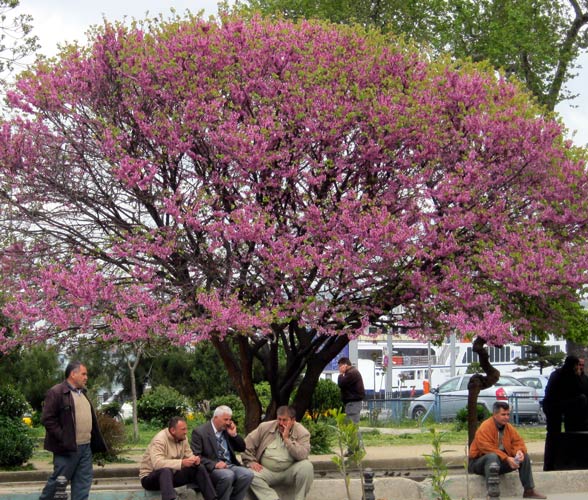 Cercis siliquastrum
4-5 m exceptionally to 8m.* Sometimes marketed as the “Love Tree” because of its distinctive blue green heart shaped leaves. A small tough drought and heat resistant tree from the Eastern Mediterranean.Masses of startling rosy- lilac pea flowers along the bare branches in spring before the leaves unfurl. This is a pretty tree for See more →
Washington Thorn
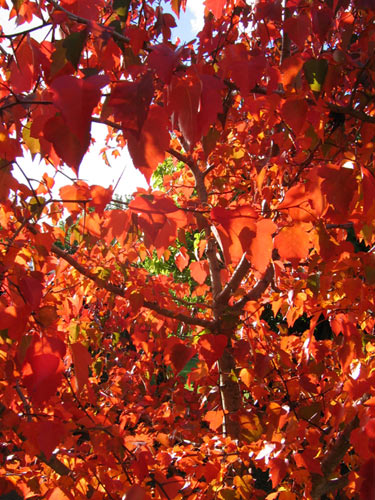 Crataegus phaenopyrum
Up to 5m.* A handsome slow thorny little tree and surprisingly hardy in WA. Famous for its glossy vine shaped leaves that colours brilliant shades of red. Through spring the tree is lost in a cloud of snow-white flowers and then in autumn the fruits or berries start to colour scarlet.Possibly the best of all the hawthorns it is hardy and deserves wider See more →
Quince
 Cydonia oblonga
 Up to 4.* A small, beautiful hardy tree that is both ornamental and useful with a long history of cultivation and romantic symbolism throughout the Middle East and Mediterranean region. The tree has silvery green leaves, pretty white and pink tinged blooms in spring and a crop of large pale yellow fruit in autumn with the trunk becoming beautifully twisted See more →
Coral Tree
 Erythina x sykesii
12m exceptionally 18m.* A fast growing, spreading and tough tree, famous for its bright orange-scarlet flowers on bare branches in late winter and early spring. Featuring large bright green leaves this tree also creates a lush shady retreat and from the harsh summer heat. Tolerating any well drained soil, second line salt and warm conditions this See more →
Brown Turkey Fig
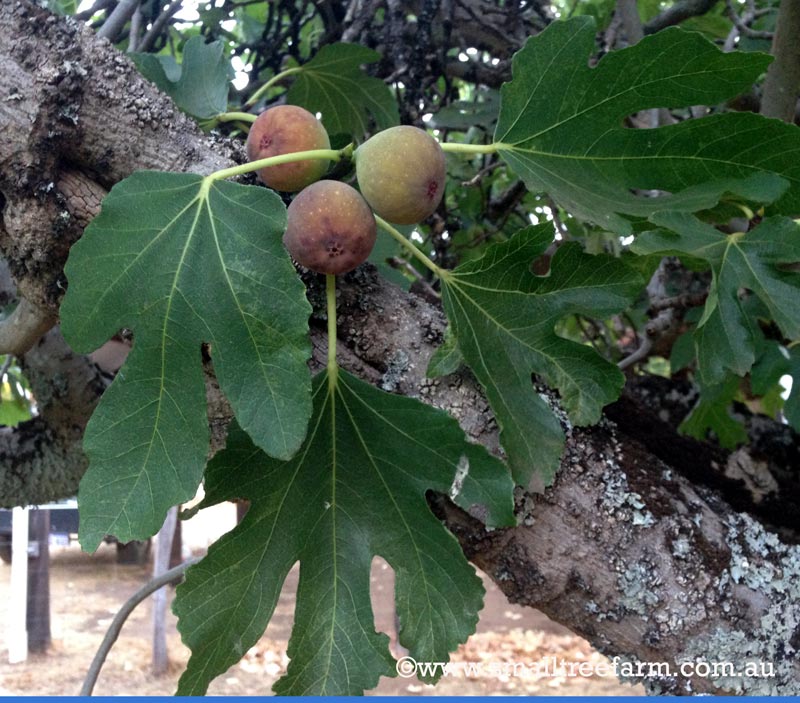 Ficus carica ‘Brown Turkey’
Up to 5m* Figs were considered sacred by the Romans and have been cultivated for many thousands of years. A slower growing but long lived and hardy tree that aside from its delicious fruit can also be used as a attractive specimen, espalier or hedge. A large brown skinned self pollinating fig with richly flavoured pink flesh. Best eaten fresh or See more →
White Genoa Fig
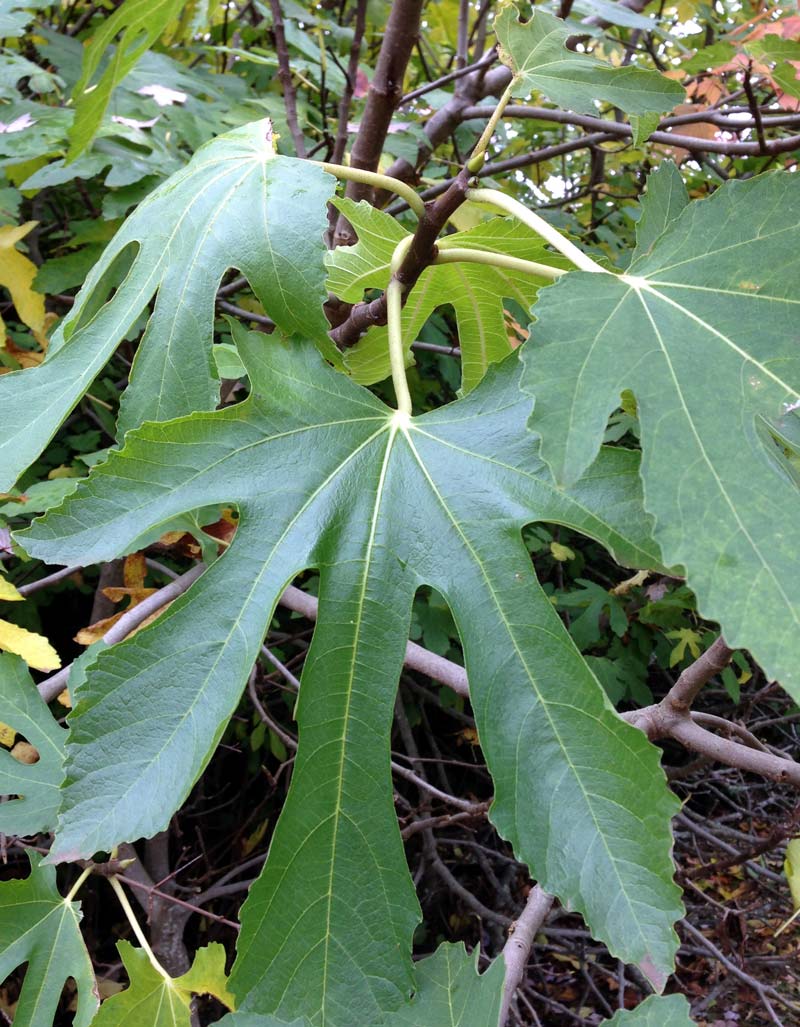 Ficus carica ‘White Genoa’
Up to 5m.*A slightly faster growing tree than the Brown Turkey but perhaps not quite as drought/heat hardy. Self pollinating with a small first crop in early summer and then the main crop later in the season. This fig is pale green with a sweet dark reddish pink centre. Ideal for drying, eating fresh and making jam. Has similar cultural requirements as the Brown Turkey Fig. See more →
 Back to top
Golden Ash
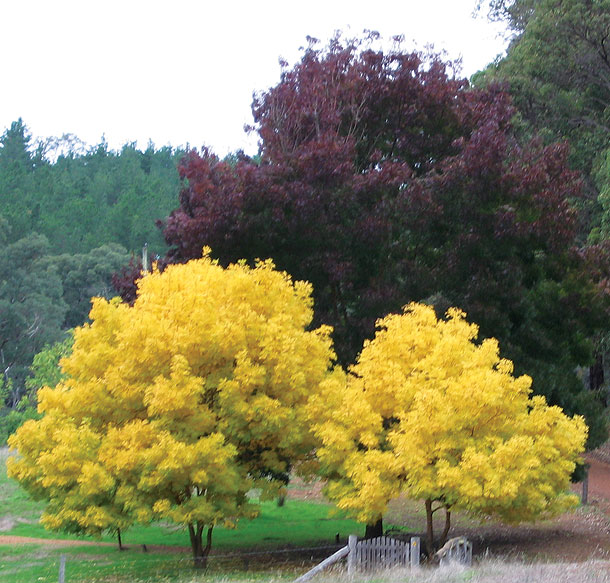 Fraxinus excelsior ‘aurea’
Up to10m.* Gold/green spring/summer foliage turning brilliant gold in autumn. Slow growing smallish tree. Winter effect of deep yellow branches and twigs with black buds.To hasten top growth and form good shape the lower early opening buds should be rubbed off the main trunk when young. Mass planted they create a special effect and stand out See more →
Flowering Ash
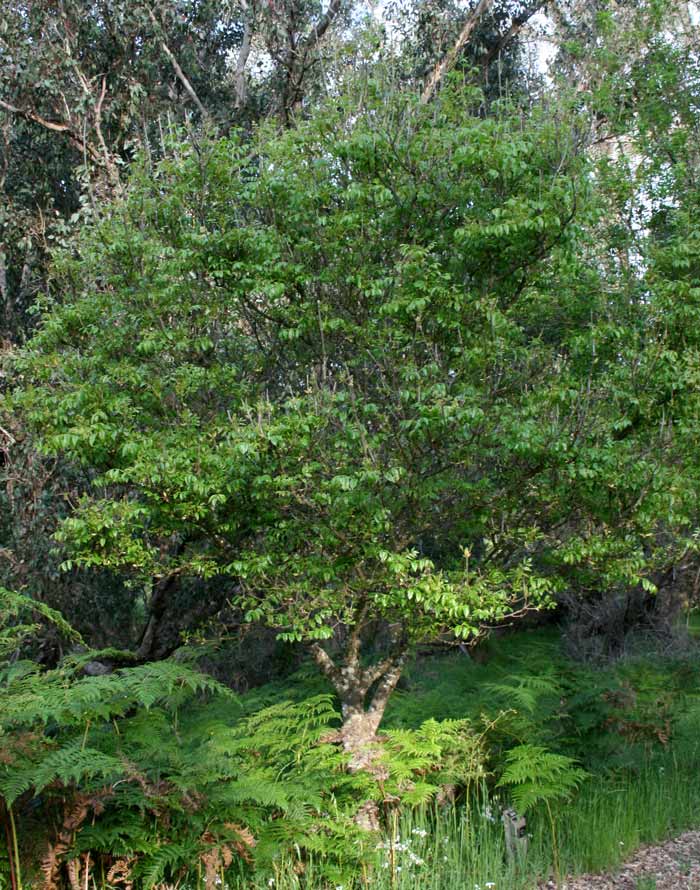 Fraxinus ornus
10m exceptionally to 15m.* Perhaps the most ornamental and versatile of all the Ashes it is surprising that this tree is not planted more often. Offering a nice neat round compact head and a smaller habit than its relatives, this tree provides an autumn journey from yellow, through to red and then purple. In addition it turns into a white cloud with See more →
Desert Ash
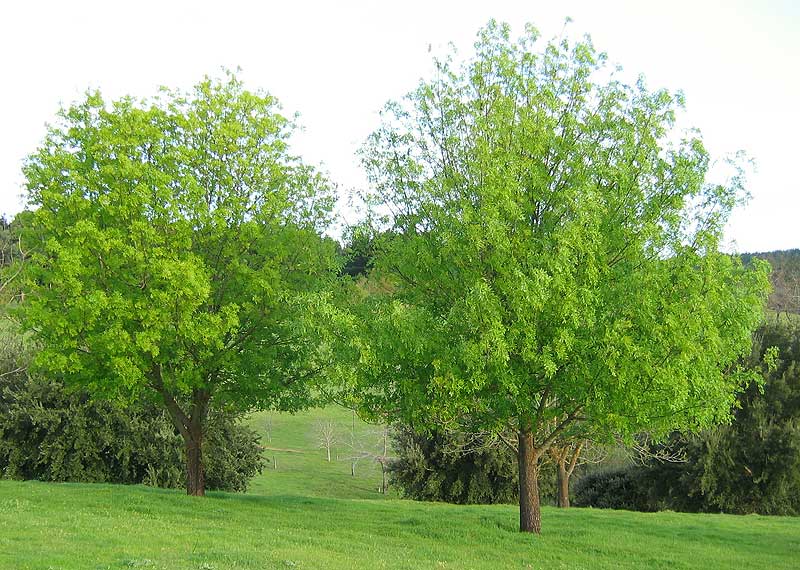 Fraxinus oxycarpa
8-10 m exceptionally to 20m.* A tough tree suited to dry conditions with good autumn colour (yellow) in cold districts and a special pastel green to its spring flushing leaves. Ranges from a smaller to medium spreading tree on hard exposed dry sites to a taller more stately specimen on deep loamy soils. A shapely and fast growing tree it has See more →
Claret Ash
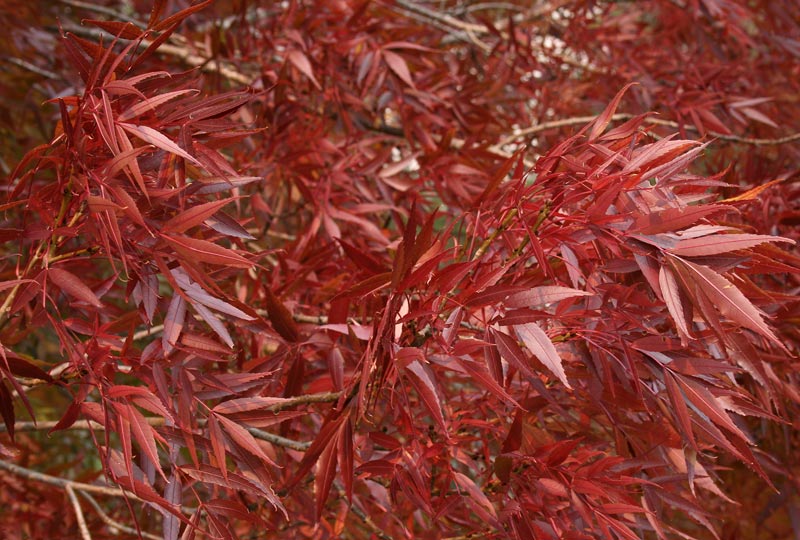 Fraxinus oxycarpa ‘Raywoodii’
10-12m exceptionally to 20m.* An Australian grafted version of the Desert Ash which reliably produces burgundy/red rich wine autumn tones. Magnificent round headed and fast growing specimen with an abundance of foliage.The small narrow leaves are a deep dark green throughout the summer. Plant in full sun to obtain the best colour. See more →
Velvet Ash
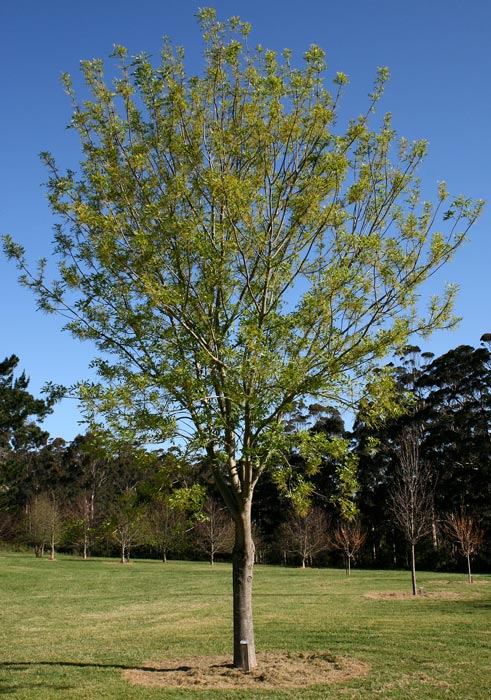 Fraxinus velutina
6-8m exceptionally to 12m.* A tough tree from Arizona able to withstand heat, drought and a little salt. Manages to look refreshing in the hardest summers. Velvety bright green summer foliage and clear yellow autumn leaves. Round headed and fairly open form. Growing on a wide range of soils from sandy loams to clay loams. Providing relatively See more →
Maidenhair Tree
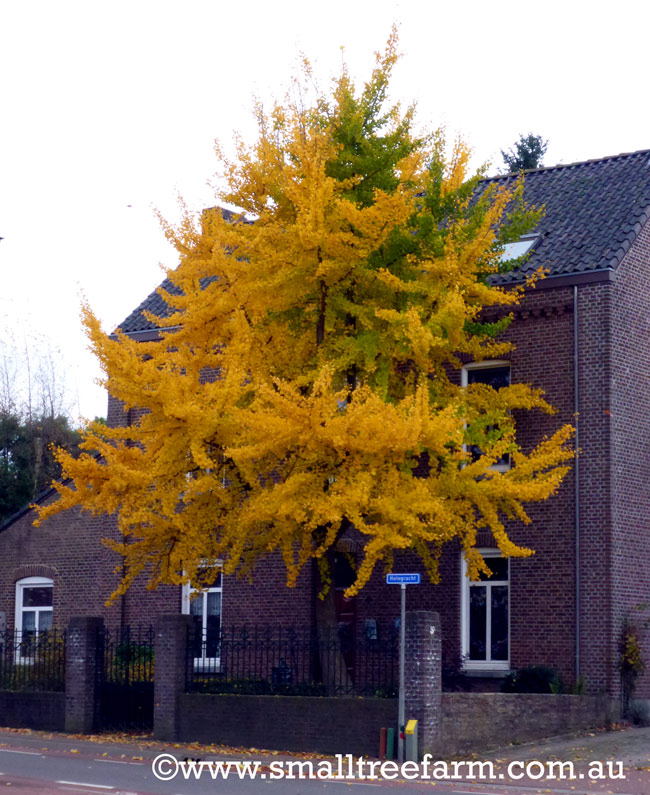 Gingko biloba
Up to 25m.* A survivor from prehistoric times, this is a truly special tree in the botanical world as it is a living fossil from over 200 million years ago. It is unknown whether it still survives in the wild, but due to it being so revered, it has lived on through cultivation. A very beautiful tree boasting unusual lime green leaves like the maidenhair fern See more →
Gleditsia “Sunburst”
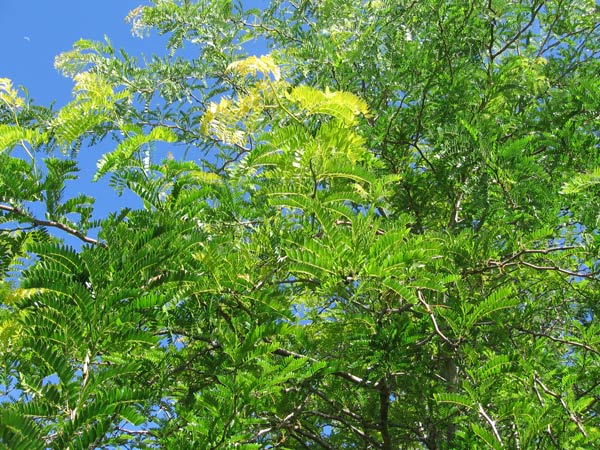 Gleditsia. triacanthos“Sunburst”
10-12m exceptionally to 18m.* An excellent street and lawn tree with delicate ferny foliage its springtime yellow leafing becomes dark green by summer before turning golden in autumn. Adaptable to a wide soil range they prefer full sun and are wet and dry site tolerant once established. A cultivar of the Honey Locust, this tree bears no thorns See more →
Back to top
Crepe Myrtle
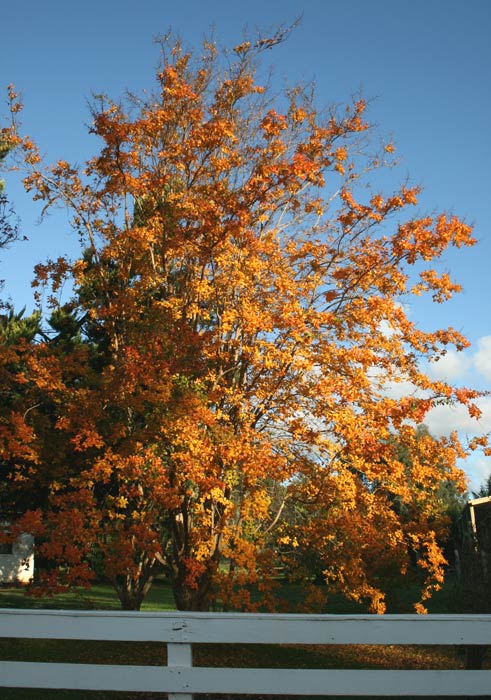 Lagerstroemia indica
5-6m exceptionally to 8m.* A small tree with masses of pink or mauve flowers during the peak of summer, yellow/orange autumn colour and attractive smooth copper-toned bark. The tree has a multi stemmed upright branching habit and mottled attractive bark. Tolerant of heat and some dryness once established but does prefer well drained, See more →
Crepe Myrtle 'Acoma'
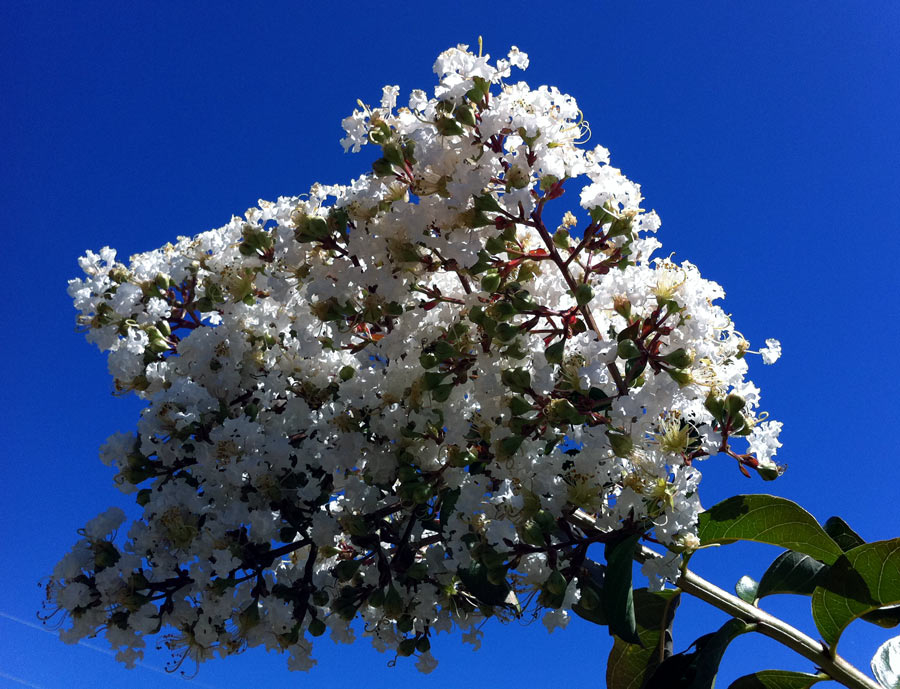 Lagerstroemia indica x L. fauriei ‘Acoma’
3 x 3m.* Very small garden tree or shrub suitable for small gardens or even for container growing. With its spreading habit and semi weeping characteristics this tree has a profusion of white flowers in late summer and stunning yellow and orange autumn colour. Same cultural requirements as the Crepe Myrtle. See more →
Crepe Myrtle 'Tuscarora'
 Lagerstroemia indica x L. fauriei 'Tuscarora'
5 x 5m* Small garden specimen or screening tree. Stunning dark fuchsia pink flowering cultivar. Prolific amounts of flowers and leaves turn a red orange in autumn particularly in colder climates. Similar habits and cultural requirements as the Crepe Myrtle.
See more →
Liquidambar
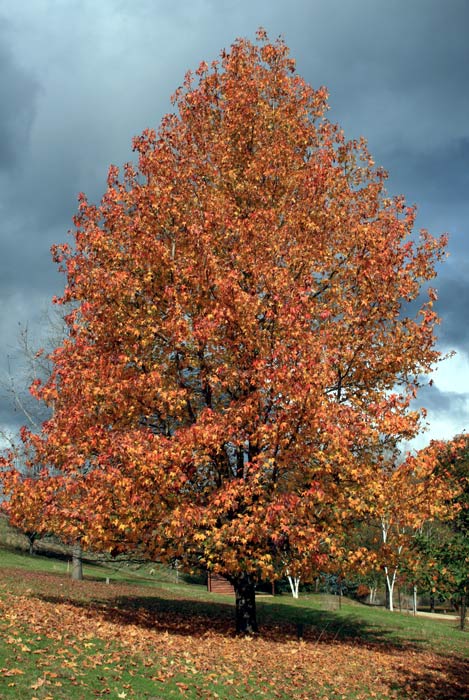 Liquidambar stryaciflua
15m exceptionally to 20m.* One of the finest and very popular famously autumn colouring tree. Amber is just one of the tones this tree may produce; crimson, bronze, purple, gold and green can also be displayed for long periods over Autumn. With its lush and bright green almost star shaped leaves these trees can also be a striking summer See more →
Back to top
White Cedar
 Melia azedarach
8-12m exceptionally 20m.* A tough deciduous tree native to WA (the Kimberly) and to northern and eastern Australia. Heavenly sprays of scented lilac flowers in spring and golden late autumn display in cooler districts. An outstanding fire retardant and widely adaptable hardy and fast growing tree that provides deep cool summer shade. Also See more →
Weeping Mulberry
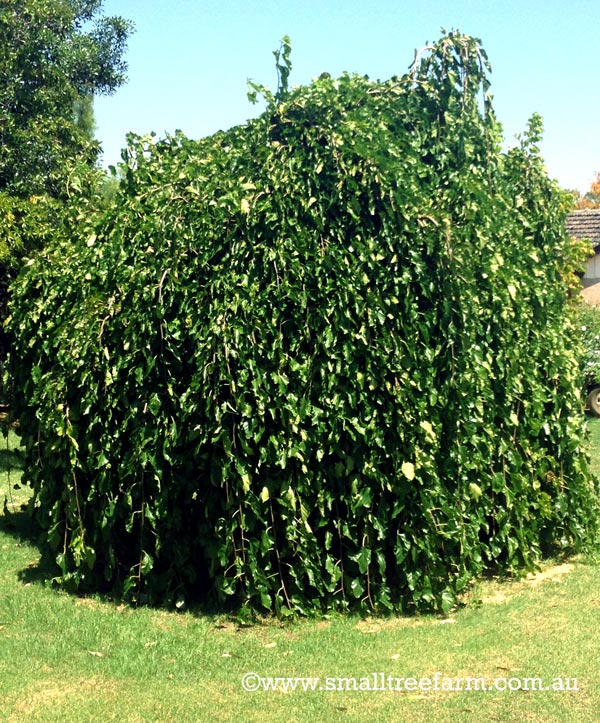 Morus Alba ‘Pendula’
Up to 4m.* A grafted classic this tree is a garden staple. Relatively fast growing it creates a waterfall of lush green leaves and pendulous branching that becomes gnarled and twisted as it matures. Very versatile and tough it can handle most soil conditions and is particularly good in coastal environments. See more →
Black English Mulberry
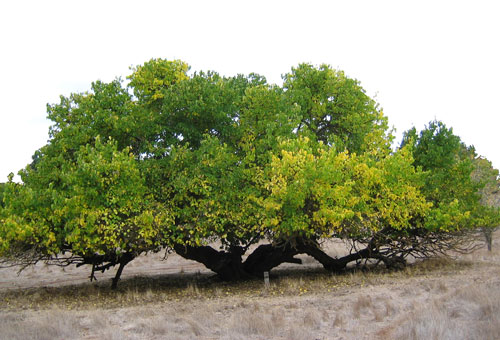 Morus nigra
Up to 6m.* Not an especially good looker but grafted to produce reliable bountiful crops of sweet delicious black berries in the summer. Broad rounded crown, spreading with age and developing a old gnarled appearance. See more →
Tupelo
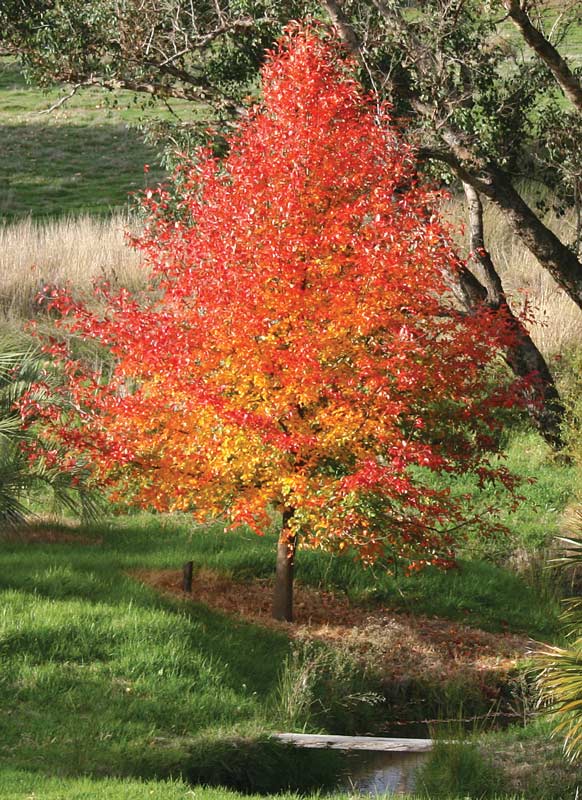 Nyssa sylvatica
 12-15m exceptionally to 18m.* An unsurpassed autumn display of purple, red, orange, yellow and green, means the rare Tupelo deserves much wider use. A magnificent specimen tree with pyramidal shaped it is very distinctive with almost completely horizontal branches. The botanical name Nyssa refers to the water nymph in Greek mythology.See more →
Paulownia
 Paulownia fortuneii
8-10m exceptionally to 15m.* Extremely fast growth, good shade and spectacular spring flowering make this a rewarding tree when grown in the right conditions.Spikes of lovely cream and lilac fox glove like flowers adorn the bare branches in spring and make for the most lovely effect. Huge lush velvety heart shaped leaves particularly See more →
Chinese Pistachio
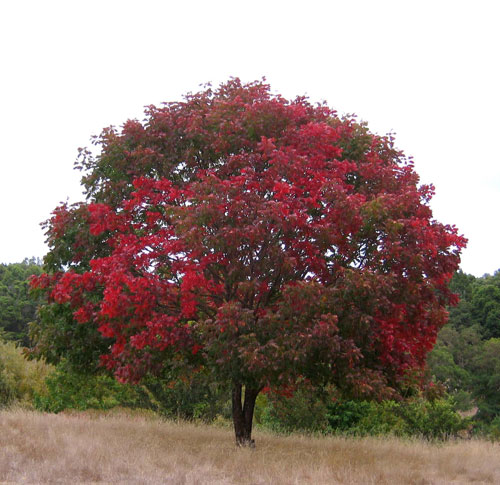 Pistachio Chinensis
7-8 m exceptionally 13m.* A small to medium sized round crowned ornamental tree with stunning scarlet/red/orange autumn colour even in warm districts. Tough and easily established it is one of the best tree choices for streets, parks or gardens as an elegant no fuss landscape tree.Provides a rich green glossy foliage and deep shade See more →
London Plane
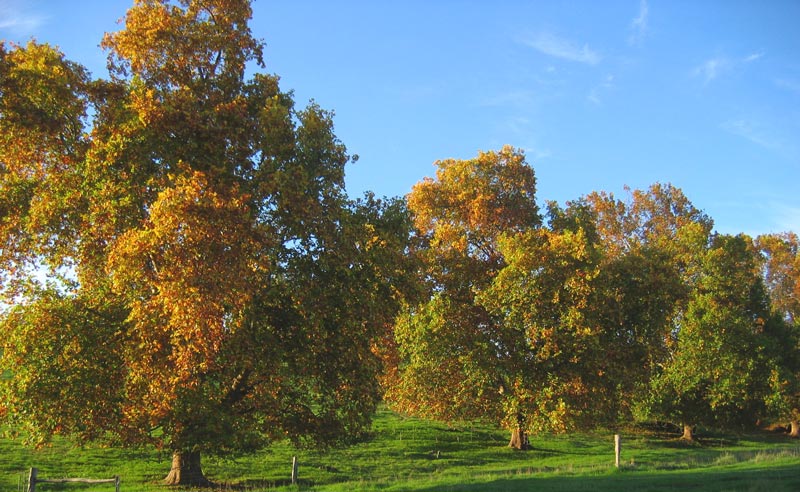 Plantanus x acerifolium
Up to 25m.* Much loved stately and specimen, avenue, and shade tree. This hybrid tree has been much used for stately urban street planting for over two centuries not least because of its extraordinary tolerance of atmospheric pollutions.A big tree with big leaves and a big presence. The huge trunks and branches are mottled attractively with See more →
Back to top
Oriental Plane
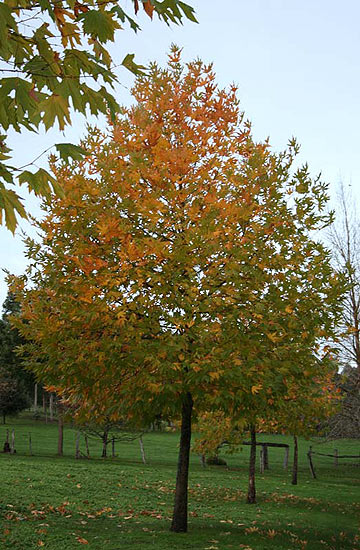 Plantanus orientalis
Up to 25m.* One of the parents of the London Plane hybrid and in some ways superior to it having better autumn colour, being more heat resistant and more tolerant of Plane Anthracnose. It also has slightly smaller and narrower deeply lobed leaves. Shares all of the other valuable growth habits and characteristic of the London Plane. See more →
Hybrid Cottonwood Poplar
 Populus deltoides x nigra
Exceptionally to 20m.* Our best selling tree. Handsome, tall, modestly broad, rewardingly fast tree of few vices. Top avenue specimen with autumn yellows. This species of Poplar is non-suckering although disturbance of the roots can initiate shoots at damage points. At its best on moist soils though reasonably able to survive dry conditions once See more →
Euphrates Poplar
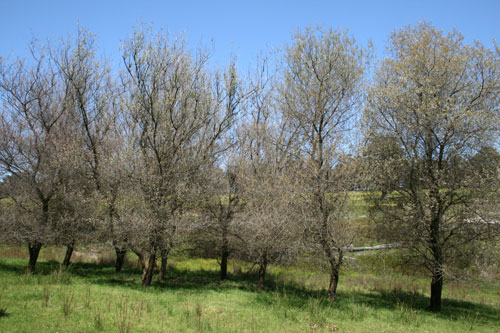 Populus euphratica
Up to 18m.* Often mistaken for a Red River Gum (but deciduous with a nice autumn yellow) this tree is something of a cross between a willow and a poplar. Heat, waterlogging and salt tolerant. Suckers profusely so should only be planted with saltland reclamation or soil erosion in mind . Foliage can be a useful stock fodder. See more →
Lombardy Poplar
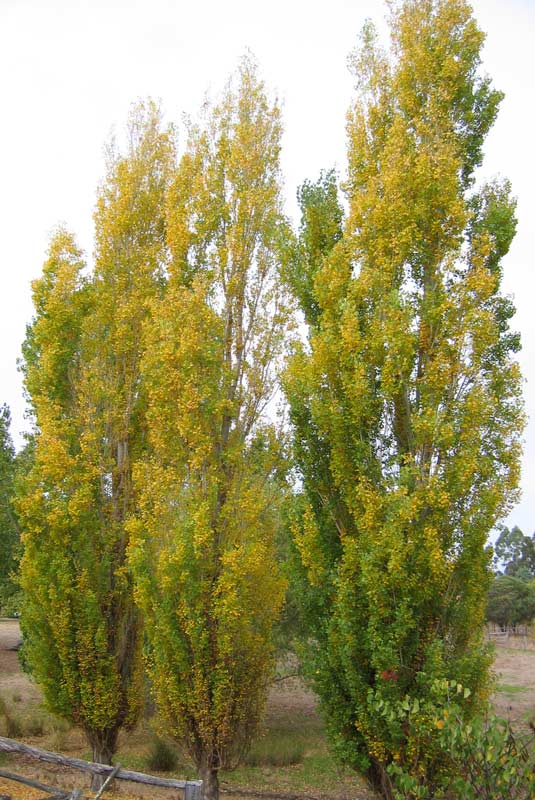 Populus nigra italica
Up to 25m.*The old favourite narrow pencil shaped poplar. A classic for formal avenue planting with nice yellow autumn colour. Although it does sucker, these (like most tree suckers) can be controlled in grazed or mowed areas. Fast growing they build character with age being able to live well in excess of a hundred years. See more →
Back to top
Simon’s Poplar
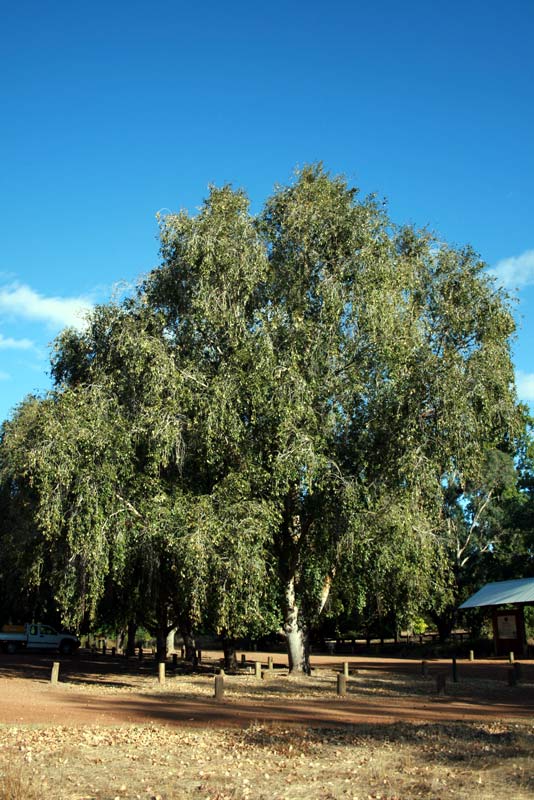 Populus simonii
10 to 13m exceptionally up to 20m.* Non suckering Chinese poplar, tall and narrow whilst young but broadens with age into a tidy and charming tree with pendulous branching. Glossy dark green diamond shaped leaves with silver underside. Demands a moist position to look good in our climate. See more →
Flowering Cherry Plum
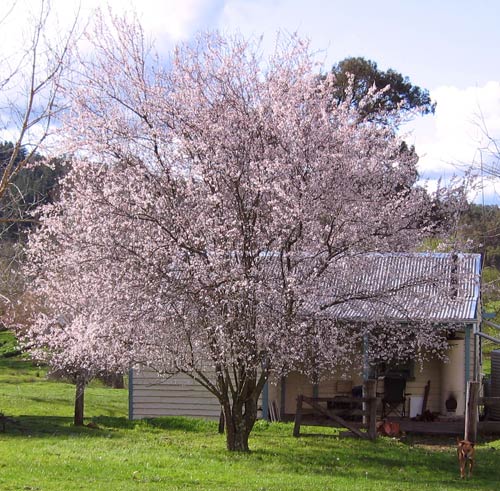 Prunus blireana
5m. * A slightly larger ornamental plum tree with prolific double pink blossoms in spring. It tempers its purple leaves with a tinge of green during the summer giving it a coppery/bronze effect. Fast to establish it is upright when young but filling out and becoming more rounded with age. See more →
Dwarf Flowering Plum
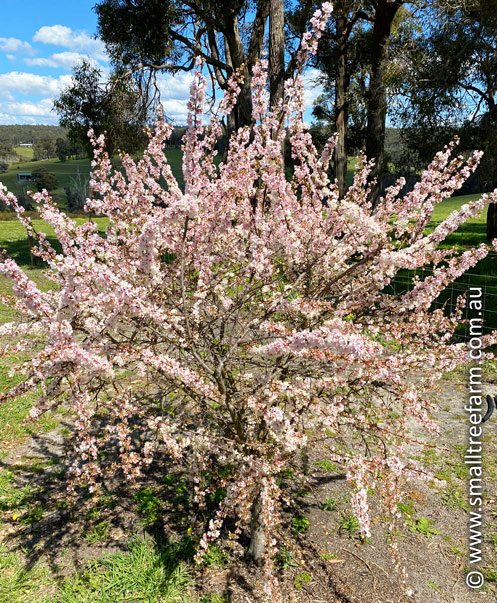 Prunus cerasifera ‘Elvins’
3m x3m.*A dwarf flowering plum suitable for the smallest of spaces with prolific flower’s completely covering the semi pendulous branches in mid spring. Blossoms begin white and then change to a coral pink as they age. Adapts to a variety of conditions but thrives best with full sun and moist well drained fertile soils. See more →
Purple Leaved Cherry Plum
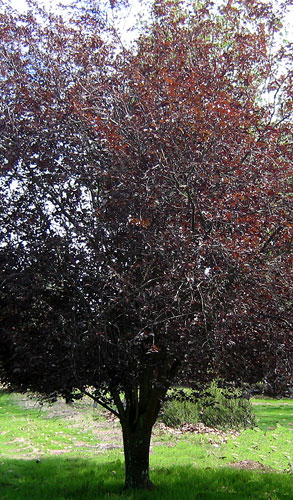 Prunus cerasifera ‘nigra’
6m exceptionally to 7m.* Probably the finest of all purple leafed foliage trees grown in Australia. Single light dainty pink blossoms on fine branches throughout spring. Its rich dark plum foliage never loses its colour and can be used as for striking contrasting effects. Though not generally thought of as a fruit tree Its cherry-plum fruit See more →.
Purple Plum Tall / Slender
 Prunus cerasifera. Var
6 x 2 m. * A very upright form of ornamental plum with a tall and slender habit perfect for those tight spaces. Lovely deep burgundy foliage and white spring flowers make this tree distinctive most of the year. Preferring full sun for best foliage colour and flowers its best in moist, well drained, fertile soils but once established should tolerate slightly drier sites. See more →.
Pomegranate “Elche”
 Punica granatum
Up To 5m.* Small fruit bearing deciduous tree / shrub native to Persia. Tough and drought tolerant perfect for our Mediterranean climate. As mature plants they are multi trunked with sculptural twisted bark and natural, arching vase like form. Bright orange flowers spring into summer and attractive autumn colour. Pomegranates are best on deep, See more →.
Back to top
Bradford Pear
 Pyrus calleryana ‘Bradford’
10- 12m exceptionally 15m.* One of the more stately of the pears the Bradford is taller than it is wide with a strong pyramidal shape and colours amongst the best oranges and reds in autumn. Like the other ornamental pears it is sun-loving and tolerates both heavy wet soils and dryness once established and has abundant white spring blossom but See more →
Capital Pear
 Pyrus calleryana 'Capital'
Up to 11m.* The narrowest form of pear available in Australia. Its width of no more than three metres at maturity makes it ideal for the tightest of urban locations. Just as decorative and resilient as the other Ornamental Pears but not an ideal specimen for rural plantings where more space is available. See more →
Glen’s Form Pear
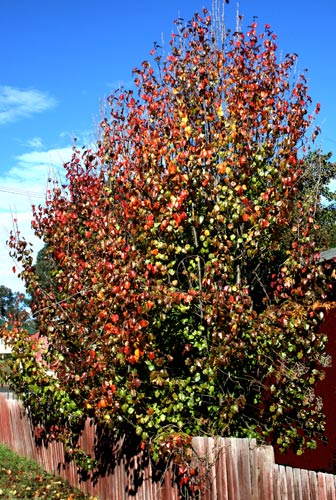 Pyrus calleryana ‘Glen’s Form’
Up to 10 m.*Also known as “Chanticleer” this is a tall narrow ornamental pear for restricted spaces. A beautiful tree that shares many of the other ornamental pears hardy and showy characteristics. Its vertical shape makes for an extremely versatile and popular tree for driveways, small gardens and urban streetscapes. See more →
Edgedell Pear
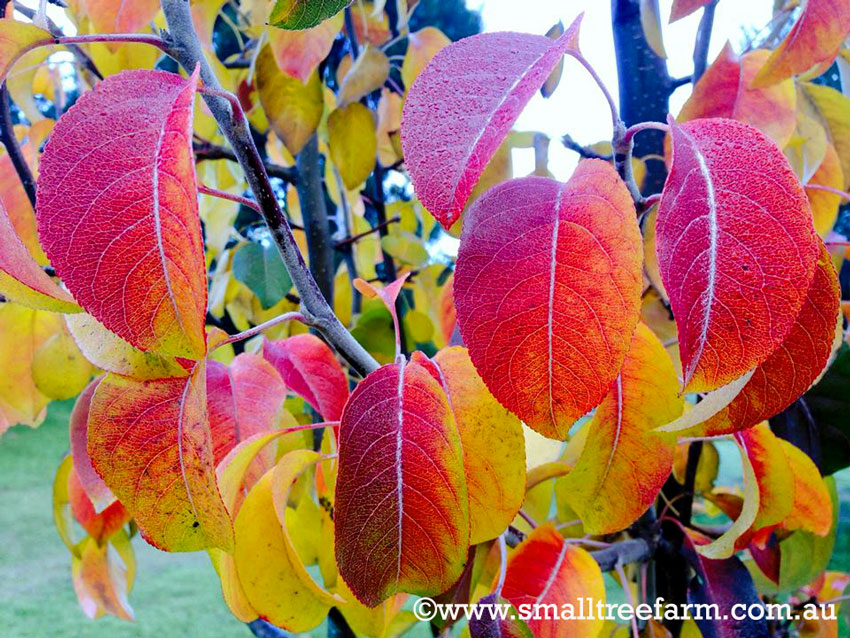 Pyrus calleryana x P.betulaefolia
7 - 8m.* A medium-sized ornamental pear with silvery/grey-toned leaves that tend to turn a dark-red (sometimes almost bordering on purple) shade in autumn. Edgedell Pear features a dense, compact canopy that is less spreading and more upright than other ornamental pears like the Bradford, Manchurian or See more →
Snow Pear
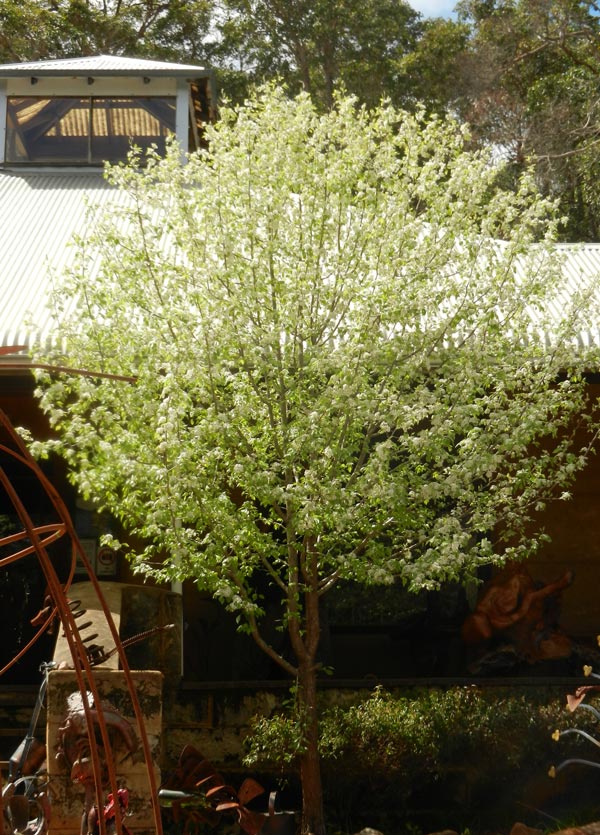 Pyrus nivalis
5-6m exceptionally 8m.* This small tree is also low maintenance and hardy but differs in that it has silvery grey green foliage and a semi pendulous branch structure which can create a very striking foliage contrast within the landscape. With masses of white spring blossoms this tree turns to impress with great autumn colour. The Snow Pear is See more →
Manchurian Pear
 Pyrus ussuriensis
6-7m exceptionally to 9m.* From the far east of Russia possibly the hardiest of all the ornamental pears and a favourite for its spreading shape. As autumn arrives the top of its crown is in brilliant shades of scarlet with the leaves changing to rich oranges before they fall. Earliest to flower with pinkish buds and pinkish white flowers. See more →
Back to top
Sawtooth Oak
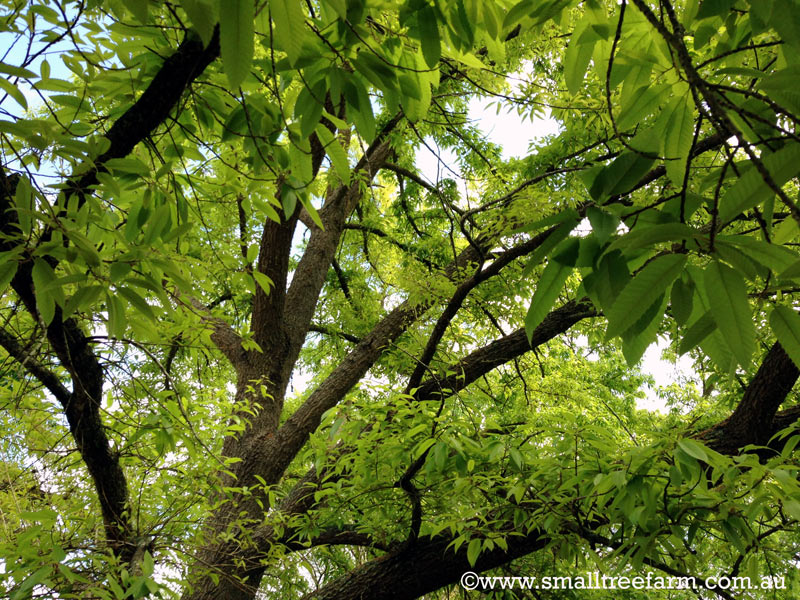 Quercus acutissima
Up to 15m.* A fast growing smaller Oak from Japan with glossy green foliage and nice yellow autumn colour. Its handsome chestnut shaped leaves with sawtooth margins hold on through most of winter. Fruits bi-annually and often produces large amounts of acorns.
See more →
Algerian Oak
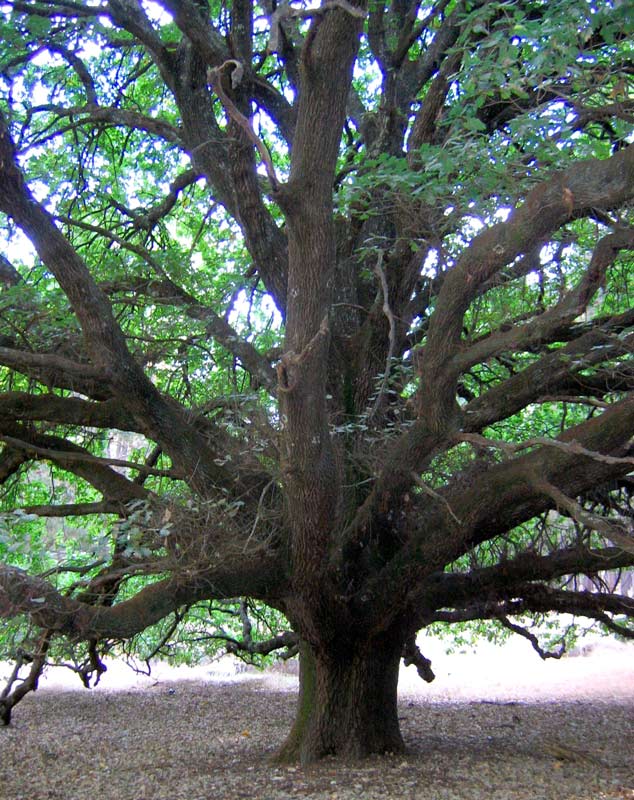 Quercus canariensis
Up to 15-20m.* A vigorous broad shady big leaved Mediterranean Oak. A semi-evergreen it holds some leaves through the winter with these turning golden late providing relief from continual grey skies.
See more →
Turkey Oak
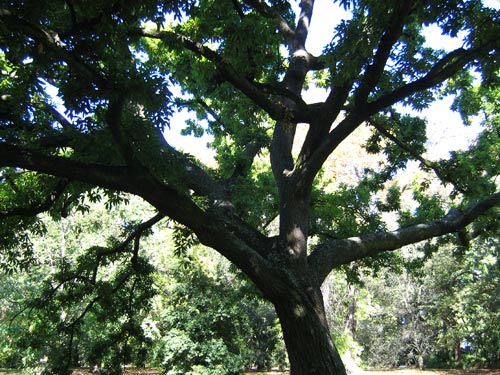 Quercus cerris
Up to 20m* Another Mediterranean oak but from the eastern end: Anatolia. Deciduous with a distinctive mossy acorn cap. Slender crown when young becoming broadly spreading with age. Good tree for coastal and exposed situations. See more →
Portuguese Oak
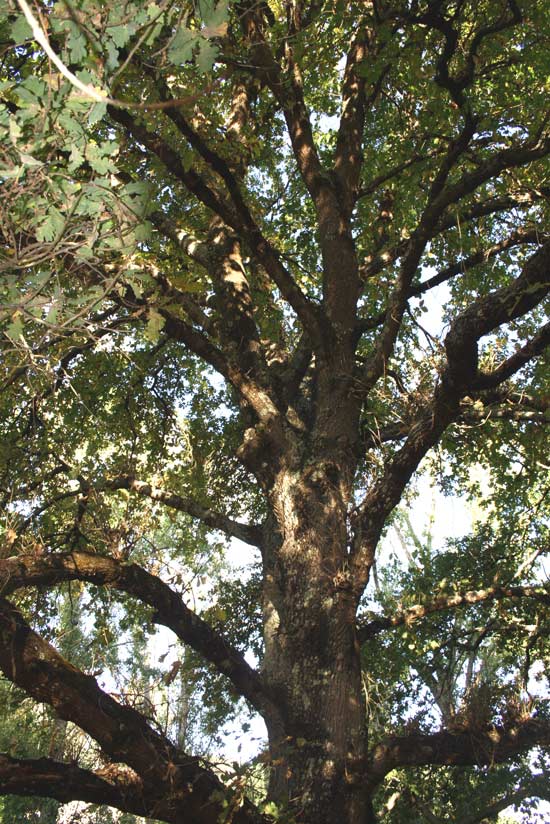 Quercus lusitanica
Up to 20m * The most commonly planted oak tree in south west Australia. Compared to the similar looking English Oak which they are frequently mistaken for, Portuguese Oaks are more semi-evergreen in nature and have extra vigour thanks to their natural suitability to our Mediterranean climate. See more →
English Oak
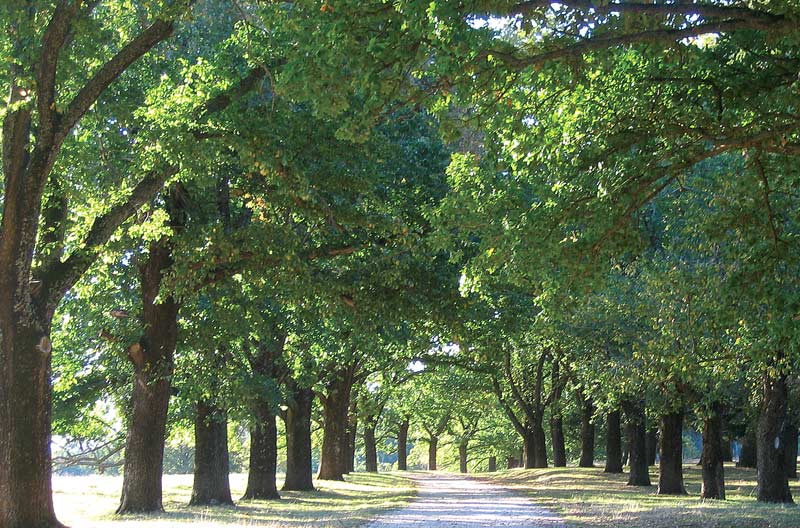 Quercus robur
Up to 25m.* Famously tall and broad majestic fully deciduous tree with nice yellow/orange autumn colour. Usually drops all its leaves by May. Not able to withstand dry and hot summers quite as well as other species.
See more →
Red Oak
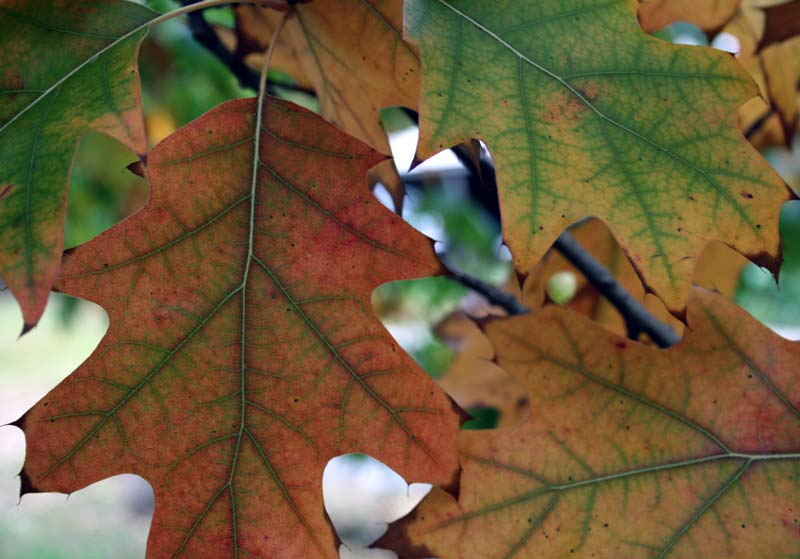 Quercus rubra
 Up to 18 m.* A well structured slightly smaller tree with bright green lobed leaves and vibrant red-golden brown autumn colour and a lovely red blush to the young spring shoots. It is broad and rounded and often nearly as wide as it is tall. Prefers moist well drained soils in cooler areas but will tolerate a wide range soils from clays to See more →
Pin Oak
 Quercus palustris
Up to 20m.* A easy oak to grow which can be fast on moist soils, with a good domed shape, drooping lower branches and glossy deeply lobed leaves. The Pin Oak colours spectacularly orange to scarlet in autumn. Often retains browned leaves into winter. Very reliable oak for a wide range of situations including parks gardens and streetscapes. See more →
French Oak
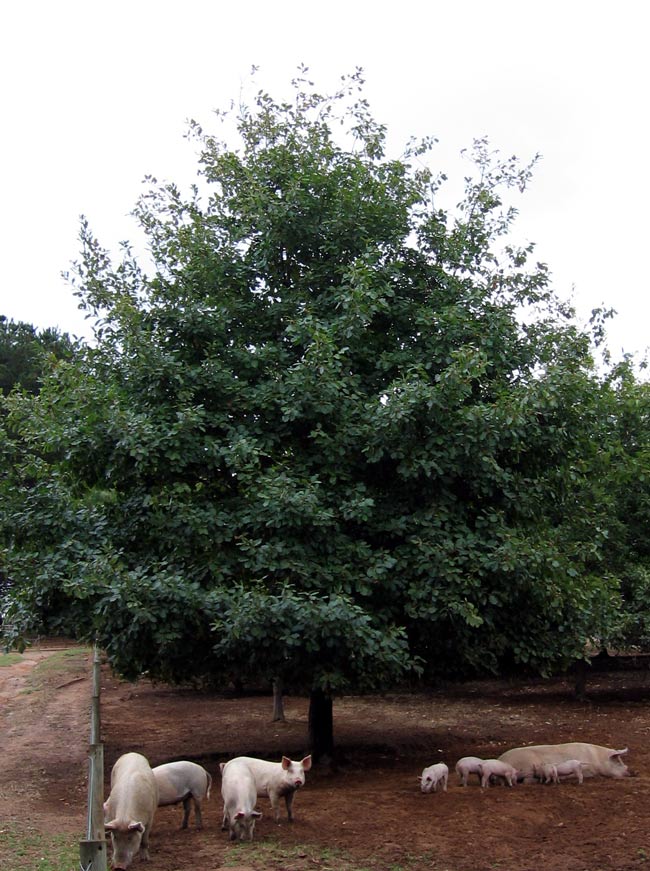 Quercus petraea
Up to 20m. *New to Australia, this famous oak is used in the French wine industry for its barrels. Similar to the English Oak, but usually more upright in habit and taller. Yellow and orange autumn colour. Vigorous and good acorn producer. This seed line originates from the forest of Ligerien in France a noted wine barrel wood producing area. See more →
Willow Oak
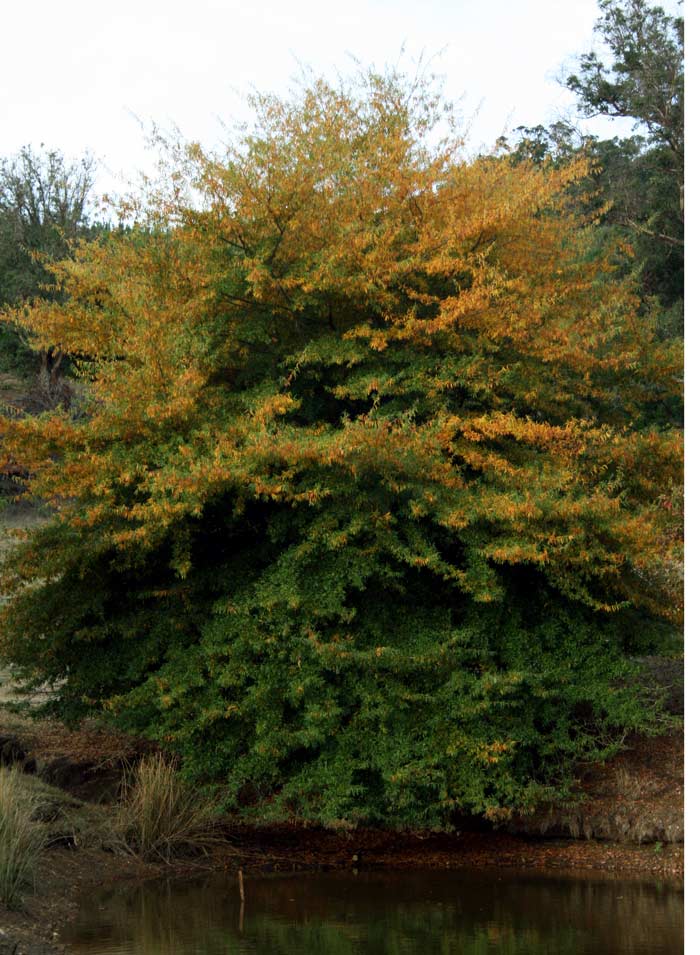 Quercus phellos
Up to 20m.* The leaves are quite unlike an Oak: narrow with smooth edges like a willow, entirely without the deep lobes that characterise the Oaks. With its liking for moist sites and dainty semi-weeping habit it is not hard to see how it came by the name of Willow Oak. From warm south eastern USA. Yellow and orange autumn colour. See more →
Golden Robinia
 Robinia pseudoacacia ‘frisia’
Up to 12m x 6m.*A beautiful medium sized tree with showering golden foliage in both spring and autumn and almost fluorescent green leaves in summer. Long lasting flowering with huge umbels of white pea flowers in summer make this a flamboyant tree which can make a brave statement when massed.This robust fast-growing tree likes full sun in See more →
Mop Top Robinia
 Robinia pseudoacacia umbraculifera
 5 x 6m.* A tough compact tree with a neat and rounded lollipop shape. The Moptop Robinia's thick, lush jade-green foliage throws a surprisingly deep shade for a tree of small stature. Perfect for tight spaces like courtyards and urban environments, it can be used repetitively for great formal effect, or as feature tree. Although it prefers well-drained soils it is very resilient to most soil types See more →
Weeping Willow
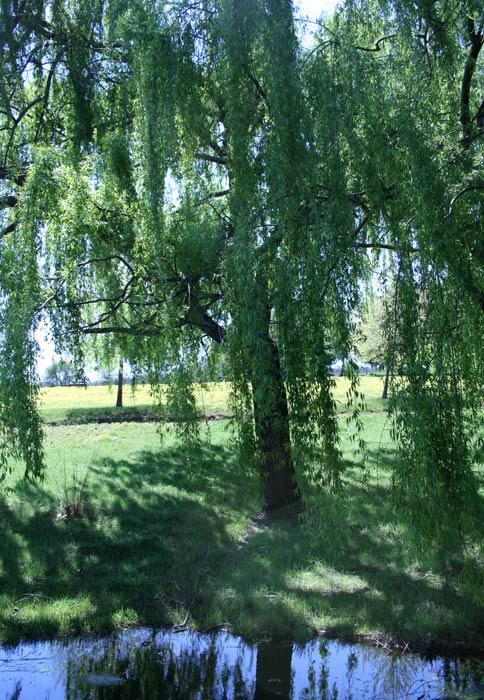 Salix babylonica
Up to 12m x 12m.* The classic waterside statement of cool and green, the cascading branches personify falling water itself. Needs plenty of moisture to be at its best. Willows are not generally suitable for small gardens as they have invasive root systems. However in larger areas near water they can be delightful and help with erosion See more →
Golden Weeping Willow
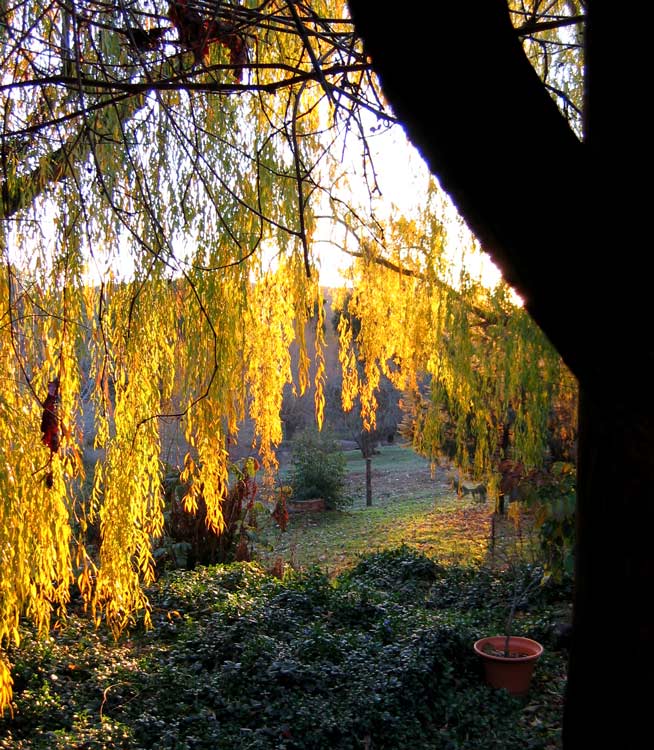 Salix chrysocoma
Up to 12m.* More colourful than the common green weeping willow with golden flowers, branchlets and strong autumn colour but not quite as weeping. Also needs adequate moisture to perform but will grow in most soils.
See more →
Back to top
Corkscrew Willow
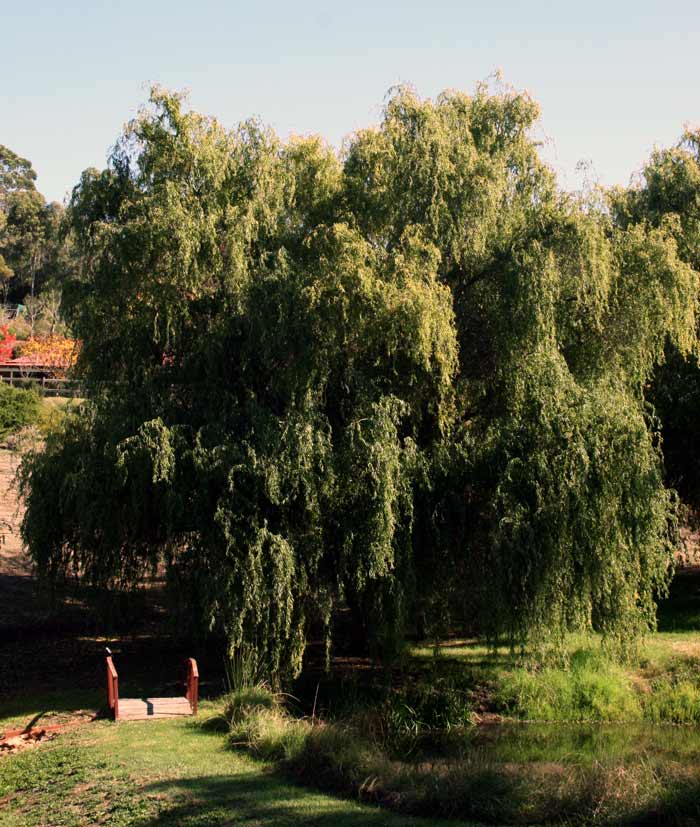 Salix matsudana torulosa
Up to 12m.* An upright cool, green Willow in summer which reveals bizarrely twisting branches in winter; prized for floral arrangements. Same cultural requirement as any Willow. See more →
Weeping Pagoda Tree
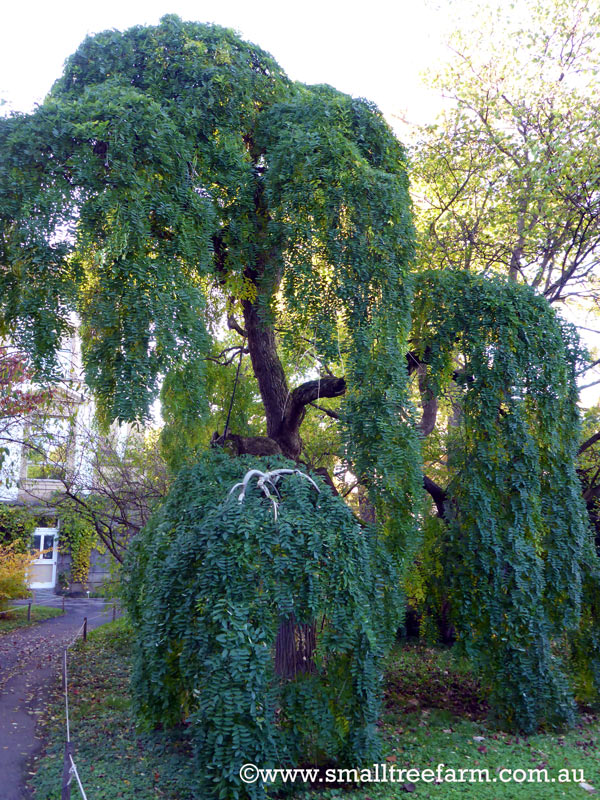 Sophora japonica ‘Pendula’
Up to 5m.* A picturesque grafted weeping tree with a gnarled trunk and stiff pendulous branching. Lush green cascading foliage is its main attribute as it seldom flowers. Moderately fast yet very long lived the tree gets more twisted and sculptural with age. Tolerant of any free draining soil it withstands See more →
Swamp Cypress
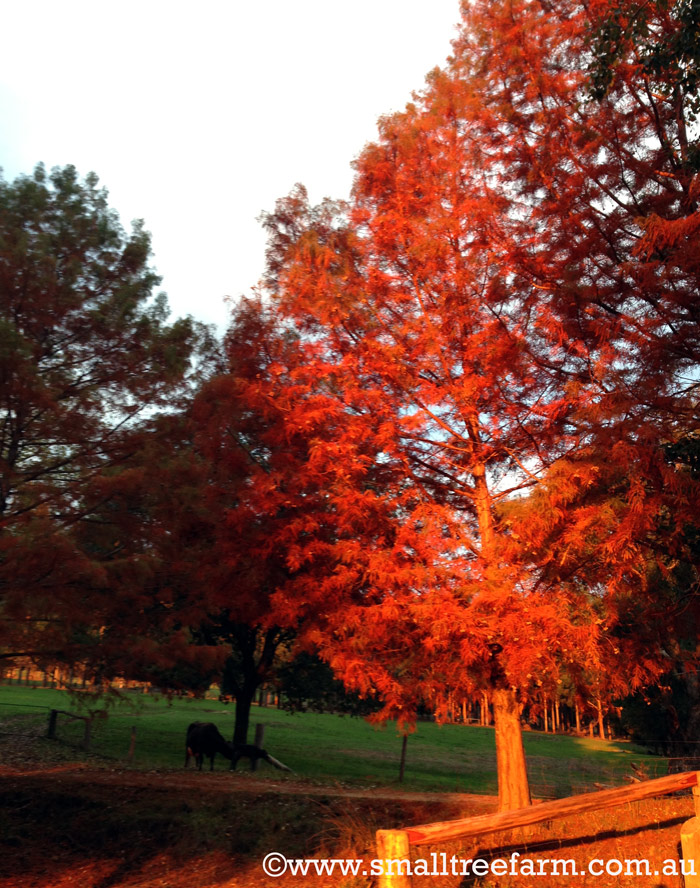 Taxodium distichum
10-12m exceptionally 20m.* An unusual long living conifer that is not evergreen but loses its leaves in winter after turning a brazen red/orange. They grow so close to sea level in Florida that they spends so much of the year inundated by semi-estuarine water that See more →
Chinese Elm
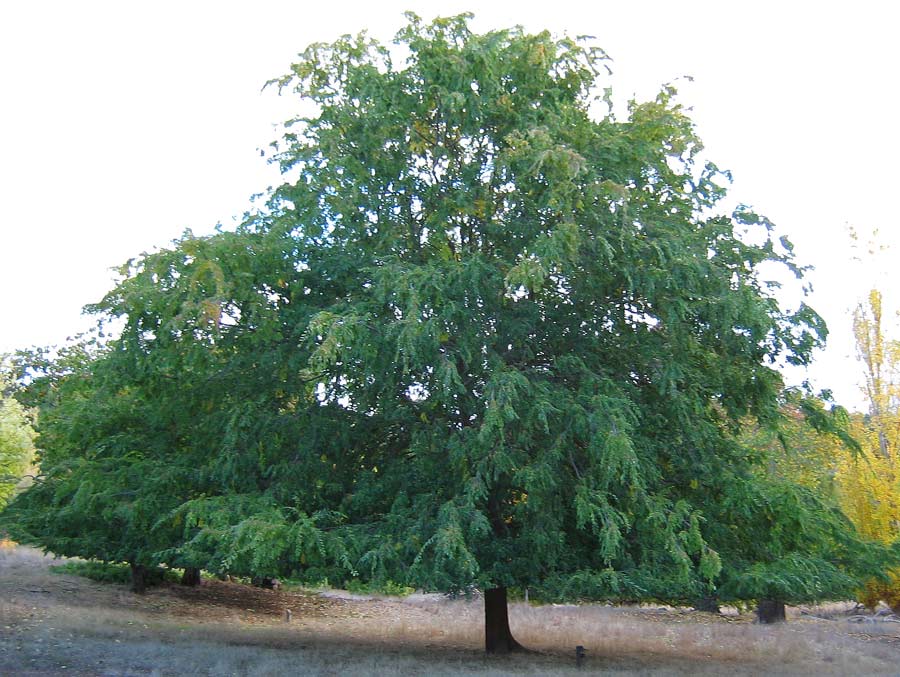 Ulmus chinensis
7-8m exceptionally 12m.* A tough semi-evergreen tree with small glossy leaves and open graceful habit with somewhat pendulous spreading branches.. Late autumn colour in cooler districts. This tree is moderately fast growing, very reliable and once established adapts well to drier conditions. A great summer shade tree and although it holds onto See more →
Golden Elm
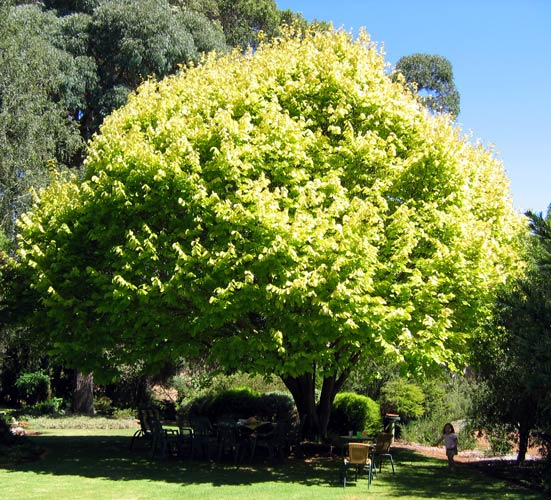 Ulmus procera “Louis van Houtte”
 10-12m exceptionally 20m.*This impressive tree has splendid foliage contrast to set off any landscape. Beginning with pale lime green leaves in spring and then bright yellow green leaves all summer it falls into a rich yellow for autumn. With a wide spreading habit it can be a great shade or feature tree when it has space to grow. Spreading and See more →
Wisteria
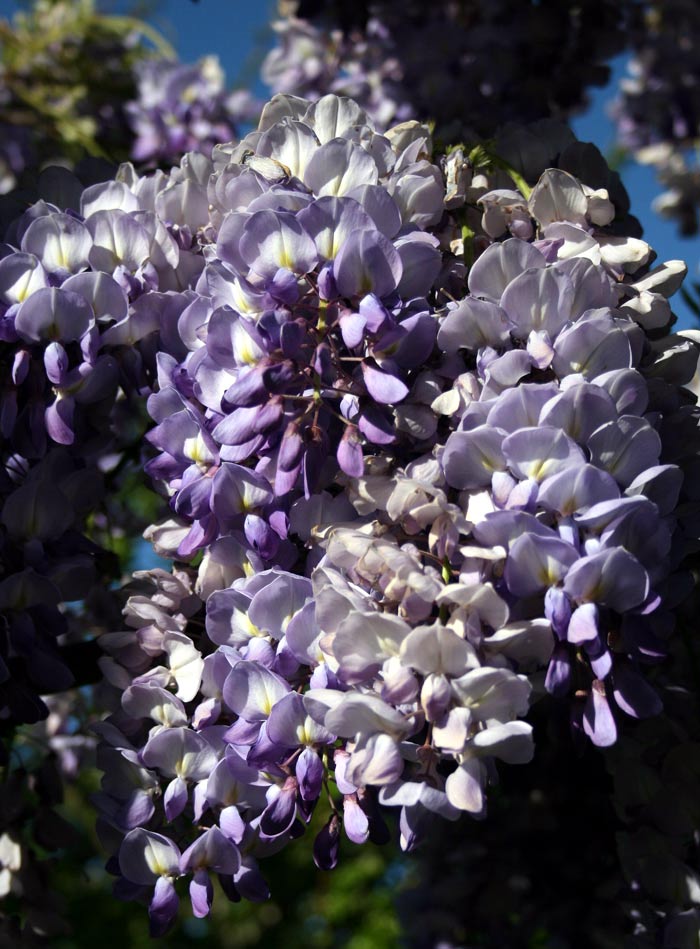 Wisteria sinensis
Up to 7m.* A deciduous extremely vigorous climber from China famous for an abundance of delicate mauve flower that hang attractively in clusters throughout spring. Also provides a gorgeous golden yellow show of leaves in autumn. Can be trained to climb in almost any fashion but also may be pruned and supported to create a tree like shapeSee more →
Japanese Elm
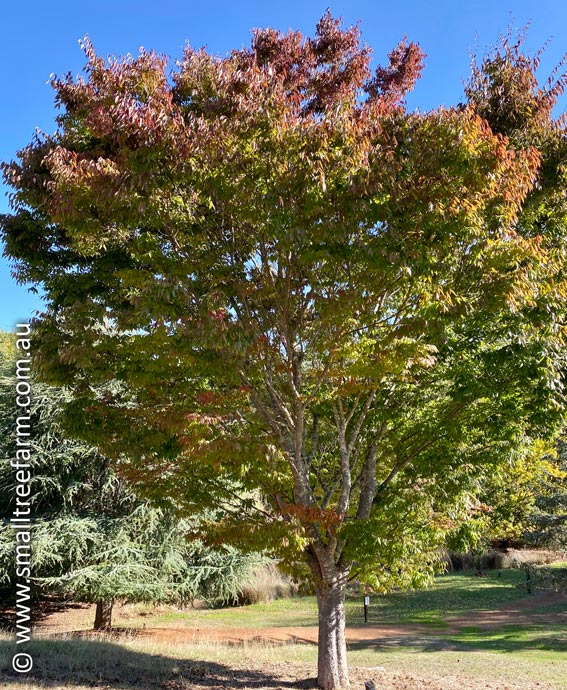 Zelkova serrata
10m exceptionally 12m.* An elegant and graceful tree, the 'Zelkova' is a relatively tough specimen adaptable to many circumstances. It turns later in autumn than most species, which makes it a good choice for extending the duration of the autumn colour in your landscape. When young, Japanese Elm tend to grow with an See more →
Back to top

Postal Address: PO Box 21 Balingup Western Australia 6253
Telephone/Fax: 08 9764 1113
Email: Contact

